
Lowest SR-22 Rates After DUI — Kansas
Free to compare
You Need SR-22 Before Reinstatement, Not After
Kansas DUI convictions trigger a mandatory SR-22 filing period that begins the moment you apply for reinstatement — which means you're shopping for SR-22 coverage while your license is still suspended, not after you get it back. Most suspended drivers assume they'll reinstate first and then find insurance, but the Kansas Department of Revenue Division of Vehicles requires proof of SR-22 on file before they process your reinstatement application. You are paying for insurance you cannot yet use to legally drive.
This creates a structural pricing problem. You are entering the SR-22 market at the exact moment carriers see maximum risk: conviction on record, suspension active, reinstatement incomplete. Carrier tier placement during this window determines whether you pay $110/month or $205/month for identical liability limits. The rate you lock in now follows you through the entire 3-year filing period unless you re-shop, and most drivers never do.
“You are buying SR-22 for a license you do not yet have, and tier placement during suspension determines your cost for all 3 years unless you re-shop.”

Compare Kansas Rates for Drivers With a DUI
Get My Kansas DUI Insurance Quote$95–$140/mo
Kansas Non-Owner SR-22 Premium Range
Non-owner SR-22 policies cover Kansas state minimums (25/50/25) without a vehicle. Standard-tier carriers typically quote $95–$125/month; non-standard tier runs $130–$205/month for identical limits. Non-owner policies are valid during hard suspension and satisfy KDOR SR-22 requirements for reinstatement.
Estimates based on available industry data; individual rates vary by driving history and county
Kansas Runs Two Separate DUI Suspension Tracks
Kansas DUI suspensions involve two parallel processes that most drivers do not realize are independent. The administrative suspension is imposed by the Kansas Department of Revenue Division of Vehicles under K.S.A. 8-1002 (Administrative License Suspension, or ALS) immediately after arrest based on breath or blood test results. First-offense ALS is 30 days hard suspension followed by 330 days restricted driving privileges. The judicial suspension is imposed by the criminal court as part of sentencing and runs separately.
Both tracks require separate reinstatement steps. Resolving your court case does not lift the DOR administrative suspension. Satisfying DOR reinstatement requirements does not resolve court-ordered conditions. You must address both before full driving privileges return. SR-22 is required by DOR for reinstatement of the administrative suspension, and ignition interlock device (IID) installation is mandatory under K.S.A. 8-1015 for restricted driving privileges during both tracks.
Carriers do not care which track you are on when pricing SR-22 policies. They see the conviction, the suspension status, and the SR-22 filing requirement. The dual-track structure matters for reinstatement sequencing but does not reduce your premium. It does mean you may need non-owner SR-22 during the 30-day hard suspension period if you no longer own a vehicle or cannot legally drive the one you own.

Kansas requires SR-22 on file before reinstatement application is processed. You are buying coverage for a license you do not yet have, and tier placement during suspension determines your 3-year cost.
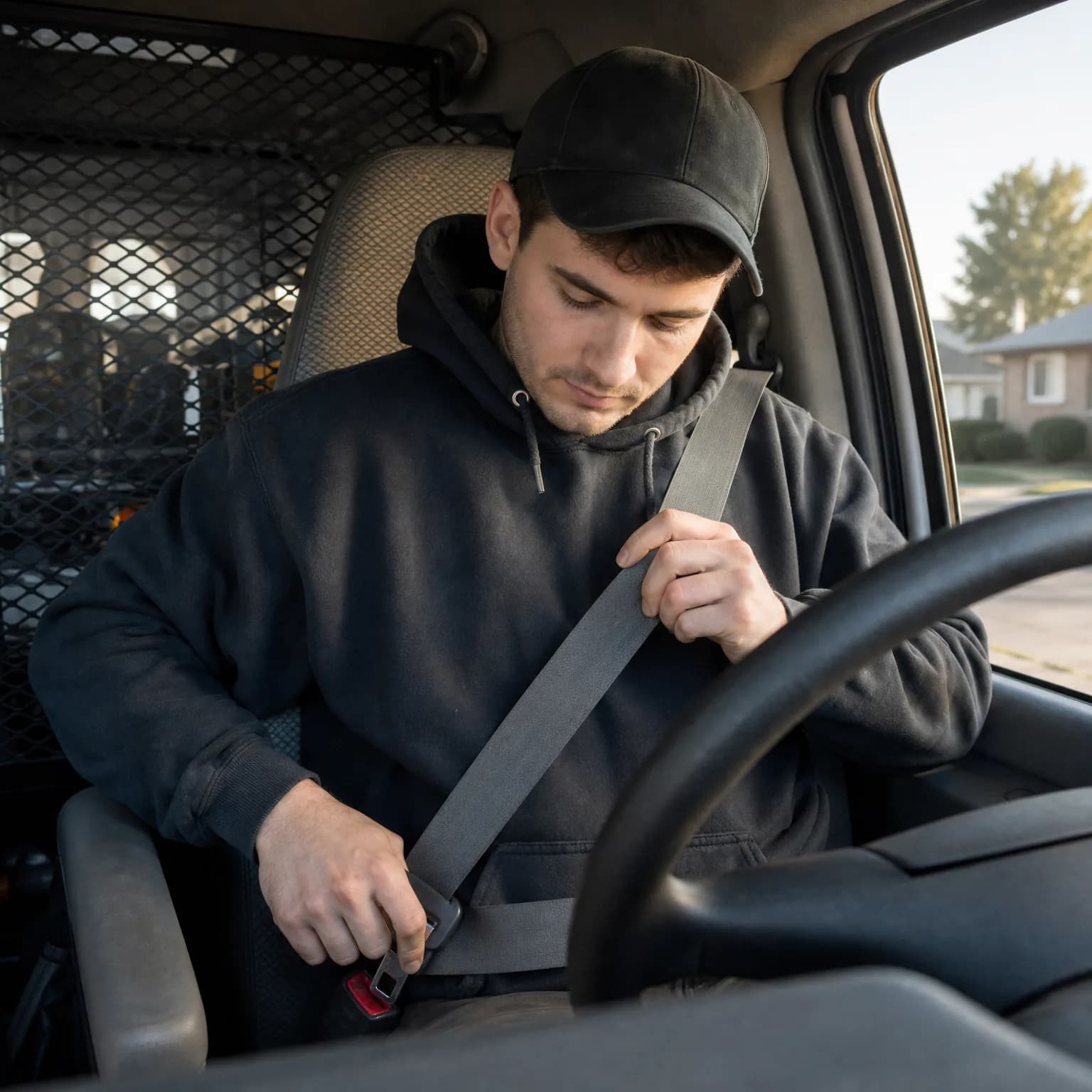






Non-Owner SR-22 Covers Hard Suspension and Reinstatement
Kansas non-owner SR-22 policies are liability-only policies that meet state minimum requirements (25/50/25) without insuring a specific vehicle. They are valid during your 30-day hard suspension, satisfy KDOR SR-22 filing requirements for reinstatement, and remain in force after reinstatement if you do not own a vehicle. Non-owner policies cost $95–$205/month depending on carrier tier and county, typically $20–$40/month less than owner policies for identical liability limits because collision and comprehensive coverage are not included.
Non-owner SR-22 is the correct product if you sold your vehicle after arrest, if someone else owns the vehicle you were driving, or if you are living with family and not listed on their policy. It is also the correct product during your hard suspension period even if you plan to buy a vehicle later, because Kansas does not allow you to drive during hard suspension and paying for vehicle coverage you cannot use is wasted premium. You can convert a non-owner policy to an owner policy mid-term without re-filing SR-22 if you purchase a vehicle after reinstatement.
Geico, Progressive, The General, Dairyland, and USAA write non-owner SR-22 in Kansas. State Farm writes SR-22 but requires an owned vehicle on the policy. National General and Bristol West write non-owner SR-22 but route applicants through broker channels rather than direct online quote paths. If you attempt to quote owner SR-22 without a vehicle VIN to reduce your rate, carriers will decline the application or require proof of vehicle ownership before binding.
3 years
Kansas SR-22 Filing Period After DUI
Kansas requires SR-22 on file for 3 years from reinstatement date for DUI convictions under K.S.A. 8-1015. The clock starts when KDOR processes your reinstatement, not your conviction date or suspension start date. Lapse in SR-22 during the 3-year period triggers automatic re-suspension and restarts the filing period.
K.S.A. 8-1015; Kansas Department of Revenue Division of Vehicles

Rate Spreads by County and Driving Density
Kansas SR-22 premiums vary $30–$60/month by county due to claims frequency, uninsured motorist rates, and traffic density. Johnson County, Sedgwick County (Wichita), and Wyandotte County (Kansas City metro) produce the highest SR-22 premiums because carriers price for urban collision frequency and higher uninsured motorist claims. Rural counties (Cheyenne, Wallace, Greeley, Hamilton) see lower premiums but fewer carrier options — some non-standard carriers do not write in counties with populations under 5,000.
Your ZIP code at time of quote determines base rate, but your conviction county does not. Carriers pull Kansas driving records through the Driver Control Bureau and see the DUI conviction regardless of where it occurred, but they price the policy based on where you will garage the vehicle or, for non-owner policies, where you live. Moving counties mid-policy triggers a rate adjustment at renewal, not mid-term, unless you request an address-change re-rate.
Compare Carriers Before You File
Most Kansas DUI drivers accept the first SR-22 quote they receive because they need proof of insurance immediately to begin the reinstatement process. This produces the worst financial outcome. SR-22 filing is fast — most carriers submit electronically to KDOR within 24 hours — but binding the policy and paying the first month's premium is the expensive decision, and that decision is reversible up until the moment you pay. Quote three carriers minimum before you bind.
Request quotes simultaneously from one standard-tier carrier (Geico or Progressive), one non-standard carrier (The General or Dairyland), and one broker-routed carrier (Bristol West or National General). Standard-tier carriers decline roughly 40% of suspended-driver SR-22 applications in Kansas but approve the remainder at rates $25–$50/month below non-standard tier. Non-standard carriers approve nearly all applications but charge higher base rates. Broker-routed carriers often price between the two but require phone or agent contact rather than instant online binding. Comparing all three segments surfaces the lowest available rate for your exact suspension profile.
Kansas does not limit how many SR-22 quotes you request, and quoting does not trigger a filing with KDOR. The filing happens only when you bind a policy and the carrier submits the SR-22 certificate electronically. If you receive a lower quote after binding but before your first payment clears, you can cancel the first policy within the free-look period (typically 10–14 days) and bind the lower-rate policy without penalty. Once your first payment posts, cancellation triggers a lapse notice to KDOR unless the new policy effective date precedes the cancellation date.
How Carrier Tier Placement Works During Suspension
Preferred-tier carriers (State Farm, USAA, Amica, Auto-Owners) either decline SR-22 applicants with active suspensions outright or route them to non-standard subsidiaries. Standard-tier carriers (Geico, Progressive, Nationwide) write SR-22 for suspended drivers but apply surcharge multipliers that range 1.8x to 2.4x over clean-record base rates. Non-standard carriers (The General, Dairyland, Bristol West, National General) specialize in suspended-driver SR-22 and price $130–$205/month for Kansas minimums, but their base rates start higher and multi-year rate reduction schedules are slower.
Most Kansas DUI drivers land in standard or non-standard tier at filing. The carrier you choose now locks in your monthly cost for the 3-year SR-22 period unless you re-shop. Re-shopping after reinstatement (once the suspension clears your record but the DUI conviction remains) can drop you one tier if your new carrier weights suspension status more heavily than conviction age, but this is not automatic. Many drivers pay non-standard rates for all 3 years because they never re-quote.
Get Your Free Quote
Get My Kansas DUI Insurance QuoteFrequently Asked Questions
Do I need SR-22 if my Kansas DUI is still in court?
Kansas administrative suspension (ALS) under K.S.A. 8-1002 requires SR-22 for reinstatement regardless of whether your criminal case is resolved. The DOR suspension is independent of court proceedings. You need SR-22 on file before KDOR processes reinstatement even if your court case is pending or results in diversion.
Can I get SR-22 during my 30-day hard suspension in Kansas?
Yes. Kansas allows you to file SR-22 during hard suspension using a non-owner policy. You cannot legally drive during the 30-day period, but having SR-22 on file before hard suspension ends accelerates reinstatement processing once the 30 days expire and you apply for restricted driving privileges.
What happens if my SR-22 lapses during the 3-year period?
Kansas DOR automatically re-suspends your license the day your SR-22 lapses. The carrier notifies KDOR electronically within 24 hours of cancellation or non-renewal. Your license remains suspended until you file new SR-22 and pay a new reinstatement fee, and the 3-year SR-22 period restarts from the new filing date.
Does Kansas accept out-of-state SR-22 if I move?
No. Kansas requires SR-22 filed with a Kansas-licensed carrier. If you move to Kansas with an active SR-22 requirement from another state, you must obtain Kansas SR-22 and surrender your out-of-state license before KDOR issues a Kansas license. If you move out of Kansas during your SR-22 period, your new state may accept the Kansas filing or require you to re-file in the new state.
Can I remove SR-22 after 3 years automatically?
Kansas does not automatically remove SR-22 from your record. After 3 years from reinstatement date, contact your carrier to request SR-22 removal. The carrier notifies KDOR electronically. Your premium typically drops $15–$35/month once SR-22 is removed, but the DUI conviction remains on your driving record for 5 years and continues to affect base rate.
Do I need ignition interlock and SR-22 for Kansas DUI?
Yes. Kansas requires both ignition interlock device (IID) installation under K.S.A. 8-1015 and SR-22 filing for DUI-related restricted driving privileges and reinstatement. IID is a separate requirement from SR-22. You must install IID through a KDOR-approved provider and maintain SR-22 insurance simultaneously for the full 3-year period.
Will my rate drop after I reinstate my Kansas license?
Not automatically. Reinstatement removes suspension status from your record but does not remove the DUI conviction. Carriers price SR-22 based on conviction, not suspension status. Your rate may drop $20–$45/month if you re-shop after reinstatement and a new carrier weights suspension status more heavily than conviction age, but most carriers treat post-reinstatement DUI drivers identically to active-suspension drivers for the first 12–24 months.