
DUI Insurance for Uber Drivers — Kansas
Free to compare
The Platform Deactivation You Didn't Expect
You received a DUI arrest in Kansas and already know your personal driver's license is suspended for 30 days minimum under the Administrative License Suspension (ALS) for a first offense. What you may not realize: Uber deactivated your rideshare account the moment the conviction appeared on your Kansas Division of Vehicles driving record. The platform's background check monitors your Motor Vehicle Record continuously, and a DUI conviction triggers automatic deactivation under Uber's zero-tolerance policy for at-fault suspensions in the past 7 years.
This creates a dual-track problem Kansas DUI defendants face when they depend on rideshare income. The Kansas DOR handles your license reinstatement through the administrative suspension track. Uber handles your platform eligibility through its own review process, which does not automatically sync with state reinstatement timelines. You can satisfy every Kansas reinstatement requirement — pay the $200 DUI-specific reinstatement fee, complete the court-ordered DUI education program, file SR-22 proof of insurance for the required 1-year period, and install an ignition interlock device (IID) — and still remain deactivated from Uber for years because the conviction sits on your 7-year lookback window.
“Kansas reinstatement removes the state-level prohibition against driving — it does not remove the conviction from your MVR or satisfy Uber's 7-year clean-record requirement.”
Compare Kansas Rates for Drivers With a DUI
Get My Kansas DUI Insurance Quote30 days
Kansas First-Offense ALS Hard Suspension
Under K.S.A. 8-1002, a first-offense DUI arrest triggers a 30-day hard suspension during which no restricted driving privileges are available. After 30 days, you may petition the court for restricted driving privileges with IID installation, but this does not restore Uber eligibility.
K.S.A. 8-1002 (Kansas Implied Consent statute)
What Kansas Reinstatement Gives You vs What Uber Requires
Kansas DUI reinstatement follows a clear procedural path managed by the Kansas Department of Revenue Driver Control Bureau. You complete the DUI education course mandated by the court. You install an approved ignition interlock device through a Division of Vehicles-approved provider. You obtain SR-22 proof of insurance from a carrier licensed to write in Kansas — carriers like Geico, Progressive, State Farm, The General, Dairyland, Bristol West, and National General all file SR-22 in Kansas. You pay the $200 DUI-specific reinstatement fee plus the $50 base reinstatement fee. After satisfying all conditions, Kansas restores your full driving privileges.
Uber's eligibility requirements operate independently. The platform's background check policy disqualifies drivers with any DUI or DWI conviction in the past 7 years, measured from conviction date, regardless of whether your state license is reinstated. Kansas reinstatement removes the state-level prohibition against driving. It does not remove the conviction from your Motor Vehicle Record, and it does not satisfy Uber's 7-year clean-record requirement. The conviction remains visible on your MVR for at least 10 years under Kansas record retention rules.
This means Kansas drivers who depend on rideshare income face a minimum 7-year gap between DUI conviction and platform re-eligibility, even if they regain their personal license within months. The restricted driving privileges available after the 30-day hard suspension period — which Kansas courts grant for travel to work, school, medical appointments, or other court-approved purposes under K.S.A. 8-1015 — do not authorize rideshare driving because Uber is not legally required to hire you during a restriction period, and its own policy bars drivers with active at-fault suspensions.
Kansas restricted licenses allow court-approved work travel, but Uber treats rideshare driving as ineligible employment during any suspension or restriction period tied to a DUI.


Non-Owner SR-22 When You Sold Your Car After the DUI
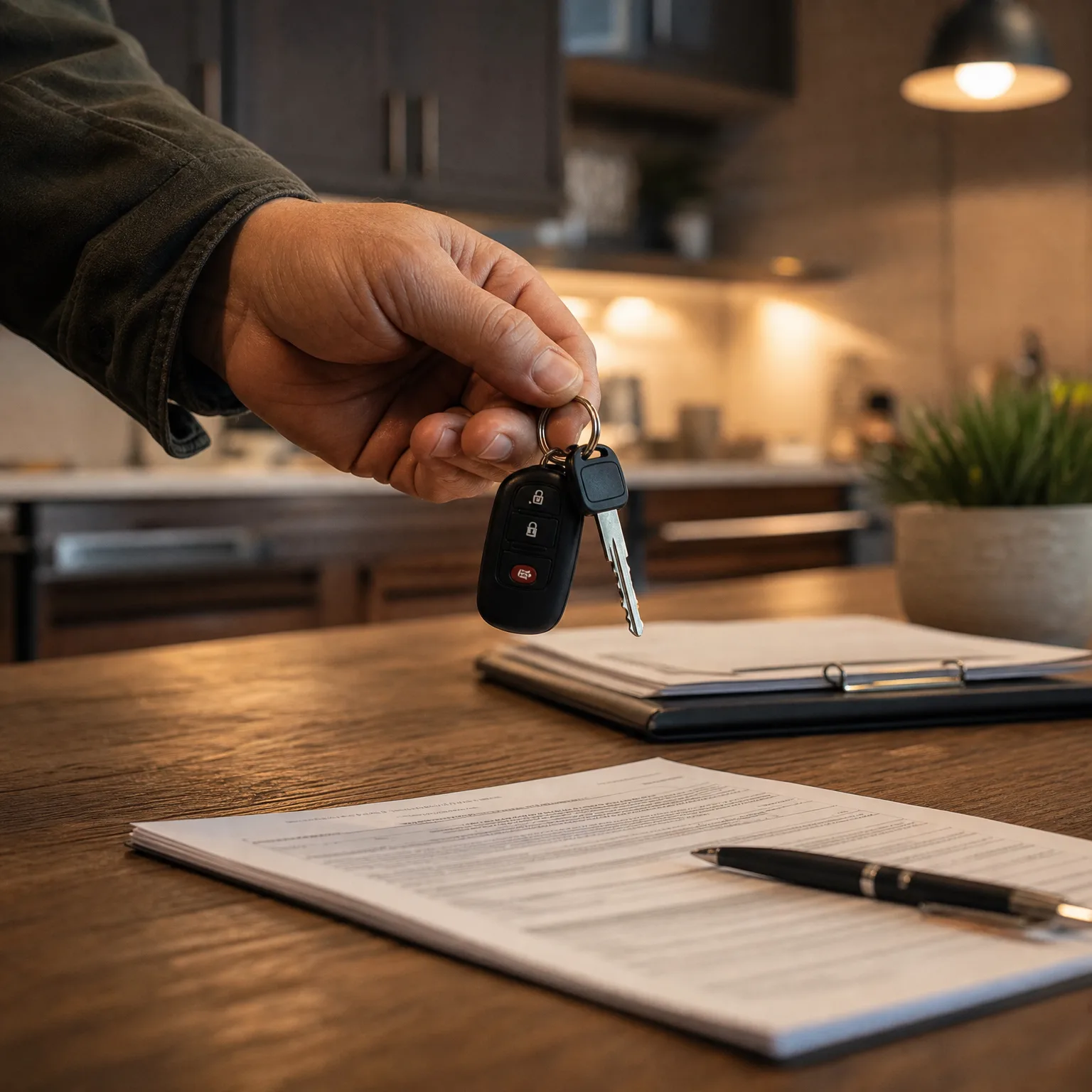
Many Kansas DUI defendants sell their personal vehicle after the arrest because they cannot legally drive it during the suspension period and cannot afford to maintain insurance, registration, and payments on an idle car. Kansas reinstatement still requires SR-22 proof of insurance even if you no longer own a vehicle. This is where non-owner SR-22 policies become the primary coverage path.
A non-owner SR-22 policy provides liability coverage when you drive a vehicle you do not own — a borrowed car, a rental, or a future rideshare vehicle once you regain platform access. It satisfies the Kansas SR-22 filing requirement at a significantly lower cost than standard owner policies because the insurer assumes you drive less frequently. Typical non-owner SR-22 premiums in Kansas range from $35 to $75 per month for minimum-limit liability. Carriers that write non-owner SR-22 in Kansas include Geico, Progressive, Dairyland, The General, and USAA. The policy does not cover a vehicle you own or regularly use, so if you later buy a car or lease one for personal use, you must convert to a standard owner policy and refile SR-22 under the new policy to avoid a lapse.
The non-owner path works well for Kansas drivers planning to return to Uber after the 7-year conviction lookback expires. You maintain continuous SR-22 filing during your 1-year state-mandated period, satisfy Kansas reinstatement, and preserve a clean post-DUI insurance record that positions you for better rates when you eventually return to rideshare work. A lapse-free SR-22 maintenance history signals to future insurers that you complied with all state requirements without additional violations, which can reduce your premium by 15% to 25% compared to drivers with lapse events on their record.
$200
Kansas DUI Reinstatement Fee
Kansas charges a $200 reinstatement fee specific to DUI suspensions, separate from the $50 base reinstatement fee applied to all suspension types. This $250 total is due at the time you apply for reinstatement with the Driver Control Bureau and is non-refundable even if your petition is denied.
Kansas Department of Revenue Driver Control Bureau fee schedule

The Ignition Interlock Device Requirement
Kansas requires ignition interlock device installation as a condition of obtaining restricted driving privileges after the 30-day hard suspension period and as a condition of full reinstatement for first-offense DUI under K.S.A. 8-1015 and 8-1016. The IID is a breath-test unit wired into your vehicle's ignition system. You blow into the device before starting the car, and the engine only starts if your breath alcohol content registers below the programmed threshold, typically 0.02% BAC. Random rolling retests occur while you drive to prevent someone else from providing the initial sample.
You lease the device from a Division of Vehicles-approved provider — Kansas maintains a list of approved vendors on the KDOR website. Installation costs range from $75 to $150, and monthly lease fees range from $60 to $90 depending on the provider and your vehicle type. The device logs every test, every failed start attempt, and every missed rolling retest, and the provider uploads this data to the Division of Vehicles periodically as proof of compliance. Tampering with the device, attempting to bypass it, or having someone else blow into it triggers a violation report that results in immediate revocation of your restricted license and an extended reinstatement period. Kansas courts have discretion to extend IID requirements beyond the minimum statutory period if you accumulate violations during the monitoring window.
What to Do Right Now
If you are currently suspended for a Kansas DUI and were relying on Uber income, your immediate priority is Kansas reinstatement, not platform reactivation. Uber will not restore your account until the conviction ages past the 7-year lookback, regardless of how quickly you satisfy state requirements. Focus on completing the DUI education program, installing an approved ignition interlock device, and obtaining SR-22 coverage from a Kansas-licensed carrier. If you no longer own a vehicle, request non-owner SR-22 quotes from Geico, Progressive, Dairyland, and The General to compare monthly premiums. Pay the $250 total reinstatement fee to the Driver Control Bureau and confirm your SR-22 filing is active before submitting your reinstatement petition. Once reinstated, maintain continuous SR-22 coverage for the full 1-year required period without lapses to avoid triggering a new suspension that extends your Uber deactivation timeline. Compare Kansas SR-22 carriers and non-owner policy options specific to DUI suspensions on the Kansas DUI Insurance homepage to identify the lowest-cost compliant coverage path available in your county.
The SR-22 Filing Requirement After Kansas DUI
SR-22 is not a type of insurance — it is a certificate your auto insurance carrier files electronically with the Kansas Division of Vehicles to prove you carry at least the state minimum liability limits: $25,000 bodily injury per person, $50,000 bodily injury per accident, and $25,000 property damage. Kansas also requires Personal Injury Protection (PIP) and uninsured motorist coverage on all policies. Your carrier charges a one-time filing fee ranging from $15 to $50 depending on the insurer, and your premium increases because DUI convictions move you into the high-risk tier. Typical SR-22 premiums for Kansas DUI offenders range from $120 to $220 per month for minimum-limit liability coverage, compared to $65 to $95 per month for drivers with clean records.
The SR-22 filing period starts the day Kansas reinstates your license, not the day you obtain the policy. If you let your SR-22 policy lapse or cancel during the required 1-year maintenance period, your carrier notifies the Division of Vehicles electronically within 24 hours under Kansas continuous insurance reporting requirements, and Kansas suspends your license again immediately. You must restart the entire reinstatement process — pay new fees, refile SR-22, and serve a new suspension period. This lapse-reinstatement loop is the single most common failure mode for Kansas DUI defendants, and it extends your Uber deactivation period by months or years because each new suspension resets your 7-year eligibility clock with the platform.
Get Your Free Quote
Get My Kansas DUI Insurance QuoteFrequently Asked Questions
Can I drive for Uber with a restricted license after a Kansas DUI?
No. Uber's driver policy disqualifies anyone with an active suspension or restriction tied to a DUI conviction, even if Kansas grants you restricted driving privileges for work, school, or medical travel. The platform treats rideshare driving as ineligible employment during any DUI-related restriction period.
How long does a Kansas DUI stay on my driving record for Uber eligibility?
Uber disqualifies drivers with any DUI or DWI conviction in the past 7 years, measured from conviction date. Kansas retains DUI convictions on your Motor Vehicle Record for at least 10 years, but Uber's background check only reviews the most recent 7 years of your MVR for eligibility purposes.
Do I need SR-22 insurance if I'm not driving during my Kansas DUI suspension?
Yes, if you plan to reinstate your Kansas license. The state requires SR-22 proof of insurance for 1 year post-reinstatement as a condition of regaining driving privileges, even if you do not currently own a vehicle. Non-owner SR-22 policies satisfy this requirement at lower cost than standard owner policies.
What happens if my SR-22 policy lapses during the 1-year Kansas requirement period?
Your carrier notifies the Kansas Division of Vehicles electronically within 24 hours of cancellation, and Kansas suspends your license again immediately. You must pay new reinstatement fees, refile SR-22, and serve a new suspension period, which extends your Uber deactivation timeline because each new suspension resets your 7-year platform eligibility clock.
How much does SR-22 insurance cost in Kansas after a DUI?
Typical SR-22 premiums for Kansas DUI offenders range from $120 to $220 per month for minimum-limit liability coverage. Non-owner SR-22 policies cost $35 to $75 per month because the insurer assumes you drive less frequently. Estimates based on available industry data; individual rates vary by driving history, age, and county.
Can I get my Uber account reactivated early if I complete all Kansas reinstatement requirements?
No. Uber's 7-year conviction lookback is a fixed policy threshold that does not adjust based on state reinstatement compliance. Satisfying Kansas requirements restores your legal right to drive but does not remove the conviction from your Motor Vehicle Record or change Uber's background check disqualification period.
Which Kansas insurance carriers file SR-22 for DUI suspensions?
Carriers that file SR-22 in Kansas for DUI-related suspensions include Geico, Progressive, State Farm, The General, Dairyland, Bristol West, and National General. Geico, Progressive, Dairyland, The General, and USAA also write non-owner SR-22 policies for drivers who no longer own a vehicle.